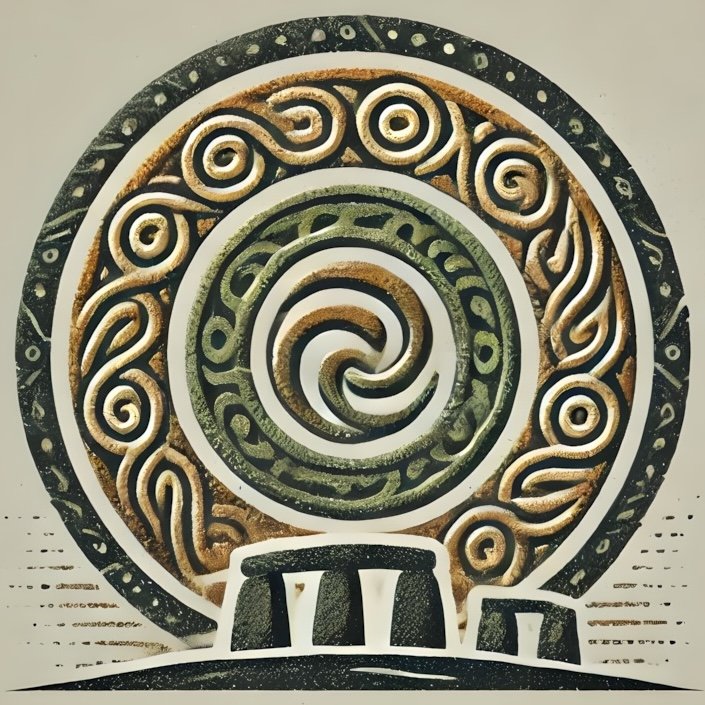

Introduction to Newgrange
Nestled in the verdant landscape of County Meath, Ireland, Newgrange stands as a monumental testament to the ingenuity and spiritual aspirations of our prehistoric ancestors. This ancient passage tomb, which dates back to around 3200 BCE, predates both Stonehenge and the Great Pyramids of Giza, making it one of the oldest known structures in the world. Newgrange is not merely a burial site; it is a complex symbol of the interplay between the natural world and human belief systems, encapsulating the rich tapestry of Irish prehistory and its profound connections to mythology and the landscape.
The Historical Significance of Newgrange
The historical significance of Newgrange extends far beyond its impressive architecture. It is a key site in understanding the Neolithic period in Ireland, a time marked by significant advancements in agriculture, social organization, and spiritual life. The construction of such a monumental structure indicates a highly organized society capable of mobilizing labor and resources, suggesting that the people of this era had developed complex social hierarchies and communal identities.
Newgrange is part of a larger group of passage tombs known as the Brú na Bóinne UNESCO World Heritage Site, which includes other monumental structures such as Knowth and Dowth. These sites collectively highlight the cultural and ritual practices of the Neolithic inhabitants of Ireland, showcasing their deep reverence for the cycles of nature, particularly the sun. The alignment of Newgrange with the winter solstice sunrise underscores the importance of solar events in their cosmology, suggesting that these ancient people possessed a sophisticated understanding of astronomy.
Furthermore, Newgrange serves as a crucial link to the mythology of Ireland. The site is steeped in folklore, with stories that connect it to the Tuatha Dé Danann, the mythical race of deities and heroes in Irish mythology. Legends tell of the great warrior Cú Chulainn and the goddess Brigid, weaving together the historical and the mythical, and demonstrating how the landscape itself is imbued with narratives that shape cultural identity.
Dating Newgrange: Archaeological Insights
Determining the age of Newgrange has been a significant focus of archaeological research. The dating of the site primarily relies on radiocarbon dating of organic materials found within the tomb, such as charcoal and bone fragments. These materials have provided a timeline that places the construction of Newgrange around 3200 BCE, situating it firmly within the Neolithic period.
The precision of this dating is crucial, as it allows historians and archaeologists to contextualize Newgrange within the broader narrative of human development in Ireland and beyond. The Neolithic period is characterized by the transition from nomadic hunter-gatherer societies to settled agricultural communities. The construction of monumental structures like Newgrange signifies not only an architectural achievement but also a shift in social and spiritual paradigms.
In addition to radiocarbon dating, the study of the site’s architecture offers insights into its age. The construction techniques employed in Newgrange, including the use of corbelled roofs and intricate stone carvings, reflect the advanced skills of its builders. The craftsmanship evident in the elaborate megalithic art, including spirals and other geometric patterns, suggests a society that placed great importance on artistic expression and symbolic representation.
The Architecture of Newgrange
The architectural design of Newgrange is as captivating as its historical significance. The tomb is characterized by its large circular mound, which is approximately 85 meters (279 feet) in diameter and 13.5 meters (44 feet) high. The outer kerb of the mound is composed of large stones, many of which are intricately decorated with prehistoric carvings. These carvings, believed to have been created by the tomb’s builders, are a crucial aspect of the site’s cultural heritage, providing insight into the symbolic language of the Neolithic people.
The entrance to Newgrange is marked by a large, intricately carved stone, which leads into a long passage that extends approximately 19 meters (62 feet) into the mound. This passage culminates in a central chamber, where the remains of the deceased were likely placed. The alignment of the passage with the winter solstice sunrise is particularly significant, as it reflects the builders’ understanding of solar events and their connection to the cycles of life and death.
The use of corbelled construction in the chamber demonstrates the advanced engineering skills of the Neolithic builders. This technique involves stacking stones in a way that creates a roof without the use of mortar, allowing for a stable and durable structure. The design of Newgrange not only serves a functional purpose but also embodies the spiritual beliefs of its creators, representing a gateway to the afterlife and a connection to the cosmos.
Newgrange and the Landscape
The relationship between Newgrange and its surrounding landscape is a vital aspect of its historical significance. The site is strategically positioned on a rise overlooking the River Boyne, a location that would have been both practical for construction and symbolic in its connection to the natural world. The landscape surrounding Newgrange is rich in archaeological sites, including other passage tombs and ancient burial mounds, suggesting that this area was a significant cultural and spiritual center for the Neolithic people.
The alignment of Newgrange with the winter solstice also highlights the importance of the landscape in shaping the beliefs and practices of its inhabitants. The rising sun on the shortest day of the year illuminates the inner chamber, creating a dramatic interplay of light and shadow that would have been awe-inspiring for those who witnessed it. This celestial event likely held profound spiritual significance, reinforcing the connection between the earth, the cosmos, and the cycle of life and death.
Moreover, the mythology associated with Newgrange is deeply intertwined with the landscape. Local legends speak of the site as a dwelling place for the gods and heroes of Irish mythology, further embedding Newgrange within the cultural consciousness of the region. The landscape itself becomes a canvas upon which stories are painted, illustrating the enduring relationship between people, place, and narrative.
Conclusion
Newgrange stands as a monumental symbol of Ireland’s prehistoric past, embodying the intricate connections between history, mythology, and the landscape. Its construction, dating, and architectural significance reveal a society that was not only advanced in its engineering but also deeply attuned to the natural world and its cycles. As we explore the rich tapestry of Irish prehistory, Newgrange serves as a focal point, inviting us to reflect on the ways in which our ancestors understood their place in the universe and the stories they crafted to make sense of their existence.