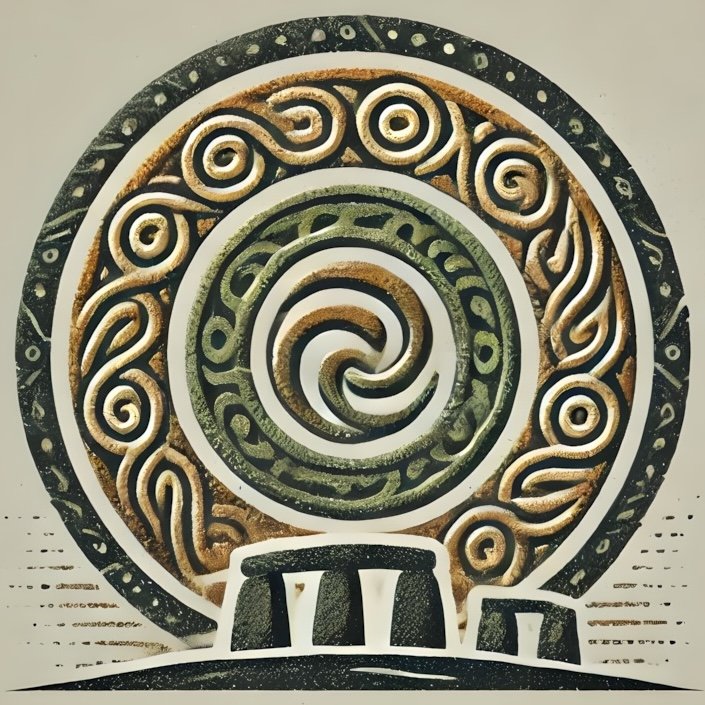

Newgrange: A Focal Point in the Irish Landscape
Introduction to Newgrange
Nestled in the verdant hills of County Meath, Newgrange stands as a testament to the ingenuity and spiritual depth of our prehistoric ancestors. This ancient passage tomb, built around 3200 BCE, predates the Great Pyramids of Giza and Stonehenge, making it one of the most significant archaeological sites in the world. As a focal point in the Irish landscape, Newgrange is not merely a burial site; it is a nexus of mythology, astronomy, and community that continues to captivate the imagination of scholars and visitors alike.
The Architectural Marvel of Newgrange
Newgrange is a remarkable feat of engineering and design. The tomb consists of a large circular mound, approximately 85 meters in diameter and 13.5 meters high, encircled by a kerb of large stones. The entrance is marked by a grand passageway that leads into a cruciform chamber, where the remains of the dead were once interred. The careful alignment of the structure with the rising sun during the winter solstice is particularly noteworthy; each year, as the first rays of dawn pierce the darkness, they illuminate the inner chamber, creating a breathtaking spectacle.
This architectural alignment is not merely a coincidence; it speaks to the sophisticated understanding of astronomy possessed by the builders. The winter solstice, a time of rebirth and renewal, would have held significant meaning for a society that relied heavily on the cycles of nature. Newgrange thus serves as a cosmic calendar, marking the passage of time and the changing seasons, reinforcing its role as a focal point in the landscape.
Newgrange in the Mythological Landscape
The significance of Newgrange extends beyond its physical structure; it is deeply embedded in the rich tapestry of Irish mythology. The site is often associated with the goddess Brigid, a figure of fertility, healing, and poetry. According to legend, Brigid was born at the site, and her presence imbues Newgrange with a sacred quality. This connection to the divine emphasizes the importance of the tomb as a spiritual focal point, linking the natural and supernatural worlds.
Moreover, Newgrange is featured in the mythological cycle known as the “Tuatha Dé Danann,” a race of deities who are said to have inhabited the land before the arrival of the Celts. The legends surrounding these ancient figures often highlight their connection to the earth and the cosmos, further solidifying Newgrange’s role as a site of worship and reverence. In this way, the landscape itself becomes a canvas for storytelling, with Newgrange at its heart.
The Role of Newgrange in the Community
Newgrange was not just a solitary monument; it served as a focal point for the surrounding communities. The construction of such an elaborate tomb would have required a significant investment of time, resources, and labor, suggesting that it was a communal effort. The act of building Newgrange likely fostered social cohesion, bringing together different groups for a shared purpose. This collective endeavor would have strengthened bonds between individuals and families, reinforcing a sense of identity and belonging.
The site may have also functioned as a gathering place for rituals and ceremonies. As a focal point in the landscape, Newgrange would have attracted people from far and wide, facilitating the exchange of ideas, goods, and cultural practices. This communal aspect is vital to understanding the role of Newgrange in the broader context of Irish prehistory, as it highlights the interconnectedness of people and places.
Newgrange and the Natural Landscape
The location of Newgrange is as significant as its structure. Situated along the River Boyne, the tomb is surrounded by a rich natural landscape that enhances its mystique. The river, with its flowing waters, symbolizes life and continuity, while the rolling hills and fertile fields evoke a sense of abundance and prosperity. This harmonious relationship between Newgrange and its environment reflects the deep connection that prehistoric peoples had with the land.
The landscape surrounding Newgrange is dotted with other ancient sites, including the nearby passage tomb of Knowth and the Hill of Tara, the ancient seat of the kings of Ireland. Together, these sites form a complex network of cultural and spiritual significance, with Newgrange at its epicenter. This interconnectedness underscores the importance of landscape in shaping identity and belief systems in prehistoric Ireland.
Newgrange as a Symbol of Continuity
As centuries have passed, Newgrange has endured as a symbol of continuity and resilience. Despite the ravages of time and the encroachment of modernity, the tomb remains a powerful reminder of the ingenuity and spiritual depth of our ancestors. Today, it continues to attract visitors from around the globe, serving as a focal point for those seeking to connect with Ireland’s ancient past.
The ongoing archaeological research at Newgrange has also contributed to our understanding of prehistoric societies and their relationship with the landscape. Each new discovery sheds light on the lives of those who built and used the tomb, revealing insights into their beliefs, practices, and social structures. This dynamic interplay between the past and present reinforces Newgrange’s role as a living monument, a place where history and mythology converge.
The Preservation of Newgrange
The preservation of Newgrange is of paramount importance, as it stands as a testament to the cultural heritage of Ireland. Efforts to protect and maintain the site have been ongoing since its discovery in the 17th century, with significant restoration work undertaken in the 20th century. Today, Newgrange is a UNESCO World Heritage Site, recognized for its outstanding universal value.
Visitors to Newgrange are encouraged to engage with the site in a respectful manner, recognizing its significance not only as an archaeological treasure but also as a spiritual and cultural landmark. The experience of standing within the tomb, feeling the weight of history, and witnessing the winter solstice phenomenon is a profound reminder of our shared human experience across time and space.
Conclusion
Newgrange is more than just an ancient burial site; it is a focal point in the Irish landscape that embodies the interplay of architecture, mythology, community, and nature. Its enduring presence serves as a bridge between the past and present, inviting us to reflect on our own connections to the land and the stories that shape our identities. As we continue to explore the significance of Newgrange, we uncover not only the mysteries of our ancestors but also the timeless themes of human experience that resonate through the ages.