
Influence of Myth on Artistic Expression
The intertwining of myth and art is a phenomenon as ancient as humanity itself. In the context of Irish prehistory, this relationship is vividly illustrated through the La Tène style, a distinctive artistic expression that flourished during the Iron Age. This style, characterized by its intricate patterns and motifs, offers a window into the spiritual and cultural life of the Celts, who inhabited Ireland during this period. The La Tène style is not merely an artistic endeavor; it is a testament to the profound influence of mythology on artistic expression, serving as a bridge between the tangible and the ethereal.
The La Tène Style: A Canvas of Myth
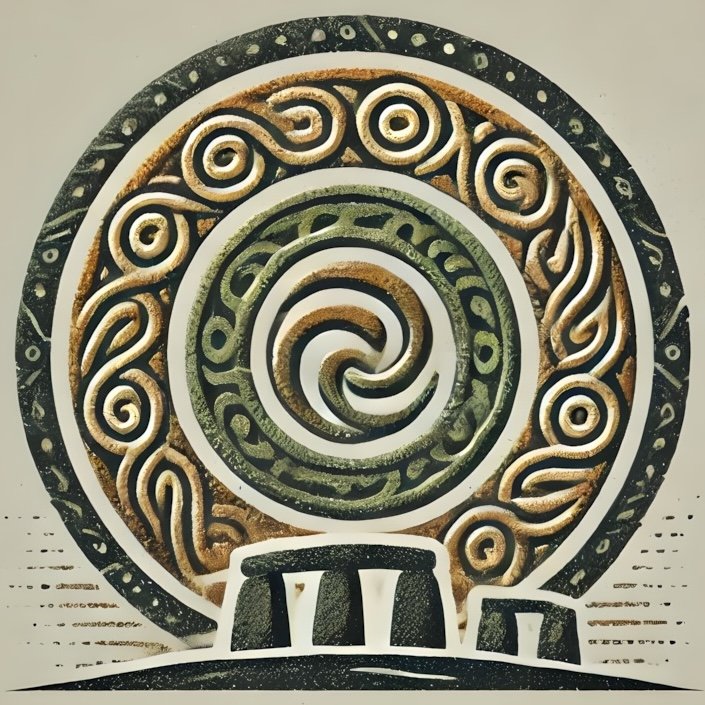
The La Tène style, named after the archaeological site in Switzerland where it was first identified, is renowned for its swirling, organic patterns and complex iconography. This artistic style is not confined to mere decoration; it is imbued with symbolic meaning, reflecting the myths and beliefs of the Celtic people. The motifs found in La Tène art—spirals, triskeles, and zoomorphic figures—are not arbitrary; they are deeply rooted in the mythological narratives that shaped Celtic cosmology.
For instance, the spiral, a recurring motif in La Tène art, is often interpreted as a symbol of the cyclical nature of life, death, and rebirth—a concept central to Celtic mythology. This motif can be seen in various artifacts, from jewelry to weaponry, suggesting that the Celts viewed these items not only as functional objects but as vessels of spiritual significance. The integration of mythological symbols into everyday objects underscores the pervasive influence of myth on artistic expression during this period.
Mythological Themes in La Tène Art
The La Tène style is replete with themes drawn from Irish mythology, which often depict the exploits of gods, heroes, and mythical creatures. These narratives, passed down through oral tradition, provided a rich tapestry of stories that artists could draw upon for inspiration. The depiction of these mythological themes in art served not only as a form of storytelling but also as a means of connecting with the divine.
One prominent theme in La Tène art is the depiction of the Otherworld, a mystical realm inhabited by gods and supernatural beings. This theme is often represented through the use of intricate patterns and motifs that evoke a sense of mystery and wonder. The Otherworld was believed to be a place of eternal youth and beauty, and its representation in art served as a reminder of the spiritual dimensions of existence.
Another common theme is the hero’s journey, a narrative arc that is central to many mythological traditions. In Irish mythology, heroes such as Cú Chulainn and Fionn mac Cumhaill embark on epic quests, facing formidable challenges and undergoing profound transformations. These stories, rich in symbolism and moral lessons, were often depicted in La Tène art, serving as both inspiration and instruction for the Celtic people.
The Role of the Artist as Myth-Maker
In the context of La Tène art, the artist assumes the role of a myth-maker, translating the intangible world of myth into tangible form. This process is not merely a matter of artistic skill; it is an act of cultural preservation and transmission. By embedding mythological themes into their work, artists ensured that these narratives would endure, even as the oral traditions from which they sprang began to fade.
The artist’s role as a myth-maker is further emphasized by the communal nature of Celtic society, where art was often created for public consumption. Whether through the decoration of communal spaces or the crafting of ceremonial objects, artists played a crucial role in reinforcing the cultural values and beliefs embodied in myth. In this way, art became a powerful tool for shaping collective identity and memory.
The Landscape as a Source of Mythological Inspiration
The Irish landscape, with its rugged terrain and ancient monuments, served as a potent source of inspiration for both myth and art. The natural world was seen as imbued with spiritual significance, and many myths are closely tied to specific geographical features. For example, the Hill of Tara, a site of great historical and mythological importance, is often associated with the Tuatha Dé Danann, a race of supernatural beings in Irish mythology.
The connection between landscape and myth is reflected in La Tène art, where natural motifs are frequently employed to evoke the spirit of the land. This symbiotic relationship between art, myth, and landscape underscores the holistic worldview of the Celts, who saw themselves as an integral part of the natural world.
The Enduring Legacy of Myth in Art
The influence of myth on artistic expression is not confined to the past; it continues to resonate in contemporary art and culture. The motifs and themes that characterize La Tène art have been reinterpreted and reimagined by modern artists, who draw upon this rich heritage to explore new forms of expression. This enduring legacy is a testament to the power of myth to inspire and transform, transcending the boundaries of time and space.
In conclusion, the La Tène style offers a compelling example of the influence of myth on artistic expression. Through its intricate patterns and symbolic motifs, this artistic tradition provides a glimpse into the spiritual and cultural life of the Celts, revealing the profound impact of mythology on their worldview. By examining the interplay between myth, art, and landscape, we gain a deeper understanding of the ways in which these elements have shaped, and continue to shape, the human experience.