The Role of the Otherworld in Irish Myths
In the rich tapestry of Irish mythology, the Otherworld stands as a realm of mystery and enchantment, a place that captivates the imagination and serves as a pivotal backdrop for many mythological narratives. This ethereal domain is not merely a setting but a vital component that shapes the myths, reflecting the beliefs, culture, and landscape of ancient Ireland. As we delve into the Otherworld, we uncover its multifaceted role in Irish myths, exploring its connection to the landscape, its inhabitants, and its influence on the human world.
The Concept of the Otherworld
The Otherworld in Irish mythology is a mystical realm that exists parallel to the mortal world. It is often depicted as a land of eternal youth, beauty, and abundance, where sickness and death are unknown. This realm is not easily accessible; it is shrouded in mystery and can only be reached through special portals or under specific circumstances, such as during the festival of Samhain when the veil between worlds is thinnest.
The Otherworld is known by various names, including Tír na nÓg (Land of the Young), Mag Mell (Plain of Joy), and Emain Ablach (Isle of Apples). These names evoke images of a paradise, highlighting the Otherworld’s role as a place of ultimate fulfillment and happiness. This concept reflects the ancient Irish belief in a life beyond the physical world, a place where the soul could find peace and joy.
The Inhabitants of the Otherworld
The Otherworld is home to a variety of supernatural beings, most notably the Tuatha Dé Danann, a race of god-like figures who possess great wisdom and magical powers. These beings are often depicted as benevolent and wise, guiding and sometimes challenging the heroes of Irish myths. The Tuatha Dé Danann are not mere deities; they are intertwined with the land itself, embodying the natural and supernatural elements of the Irish landscape.
Other inhabitants of the Otherworld include the Sidhe, or fairies, who are considered descendants or relatives of the Tuatha Dé Danann. These beings are known for their beauty and capriciousness, often interacting with humans in ways that can be both helpful and harmful. The Sidhe dwell in mounds or hills known as “sidhe,” which serve as gateways to the Otherworld. This connection between the landscape and the Otherworldly beings underscores the deep relationship between the myths and the physical geography of Ireland.
The Otherworld and the Landscape
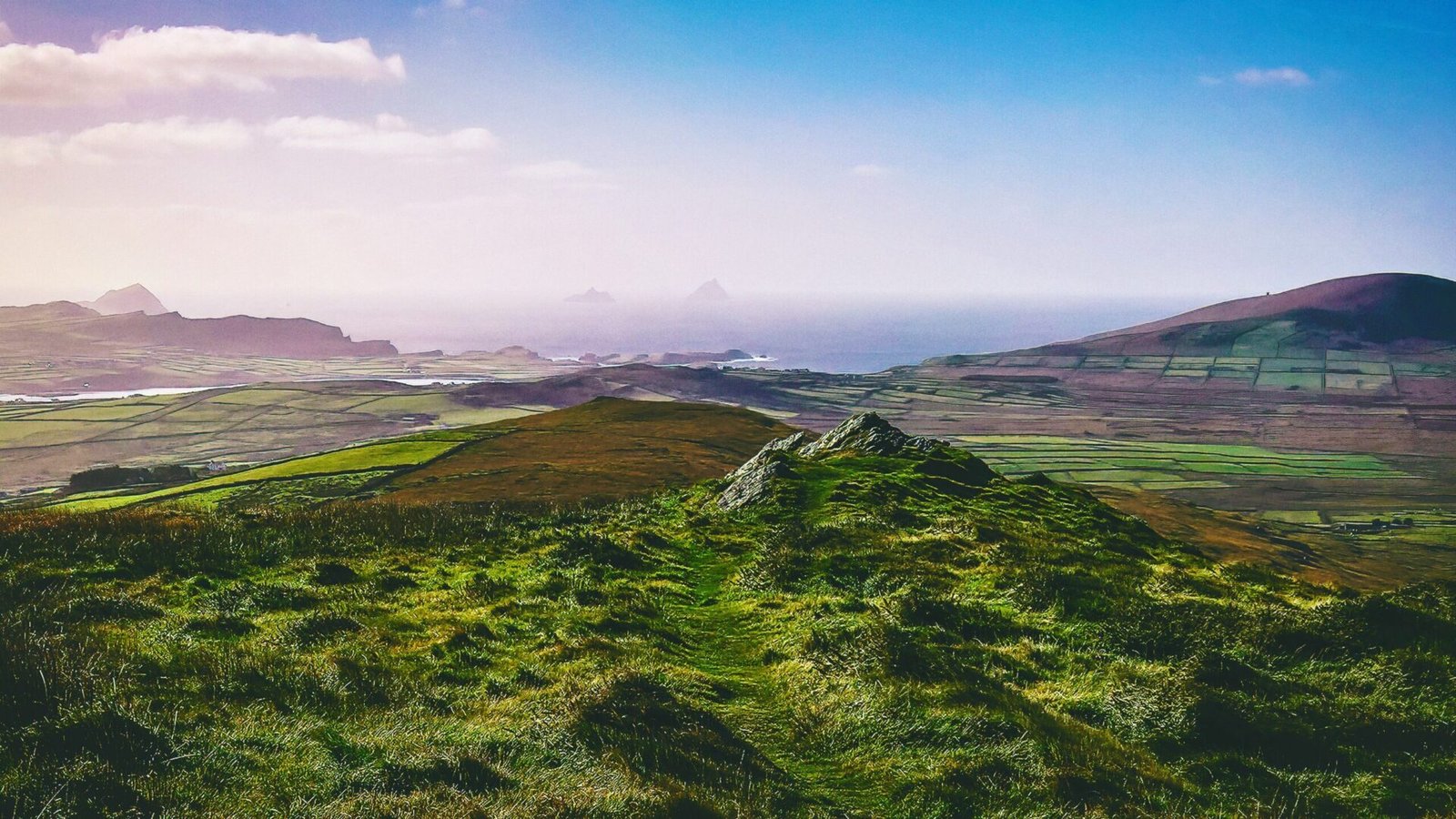
The Irish landscape is imbued with a sense of magic and mystery, with its rolling hills, ancient stone circles, and misty lakes serving as tangible connections to the Otherworld. Many geographical features are associated with specific myths and are believed to be entrances to the Otherworld. For instance, the Hill of Tara, the seat of the High Kings of Ireland, is often linked to the Tuatha Dé Danann and is considered a portal to their realm.
This intertwining of the Otherworld with the landscape reflects the ancient Irish view of the world as a living entity, where the natural and supernatural coexist. The landscape is not merely a backdrop but an active participant in the myths, shaping and being shaped by the narratives that unfold. This connection also emphasizes the importance of place in Irish mythology, where every hill, river, and stone holds a story and a connection to the Otherworld.
The Otherworld in Mythological Narratives
The Otherworld plays a crucial role in many Irish myths, serving as a setting for adventures, quests, and encounters with the supernatural. One of the most famous tales is that of Oisín, a member of the Fianna, who is taken to Tír na nÓg by the fairy woman Niamh. Oisín spends what feels like a few years in this paradise, only to return to Ireland and find that centuries have passed. This story highlights the Otherworld’s nature as a place outside of time, where the normal rules of the mortal world do not apply.
Another notable myth is the Voyage of Bran, where Bran mac Febail embarks on a journey to the Otherworld after hearing a mysterious woman’s song. His voyage takes him to various Otherworldly islands, each with its own wonders and challenges. These voyages, known as “immrama,” are a common motif in Irish mythology, symbolizing the soul’s journey and the quest for knowledge and enlightenment.
The Otherworld also serves as a testing ground for heroes, where they must prove their worthiness and courage. In the tale of Cú Chulainn, the hero is challenged by supernatural foes and aided by Otherworldly beings, underscoring the interconnectedness of the mortal and divine realms. These narratives illustrate the Otherworld’s role as a place of transformation and growth, where characters undergo trials that shape their destiny.
The Influence of the Otherworld on the Human World
The Otherworld’s influence extends beyond mythological tales, permeating the beliefs and practices of ancient Irish society. The concept of the Otherworld reflects a worldview where the boundaries between the natural and supernatural are fluid, allowing for interaction and exchange. Festivals such as Samhain and Bealtaine mark times when the Otherworld is particularly close, and rituals are performed to honor and appease its inhabitants.
This belief in the Otherworld also influenced the way the ancient Irish viewed death and the afterlife. Rather than a final end, death was seen as a transition to another realm, a journey to the Otherworld where the soul could find rest and renewal. This perspective provided comfort and hope, reinforcing the cyclical nature of life and the enduring connection between the living and the dead.
The Otherworld’s presence in Irish mythology is a testament to the rich imagination and spiritual depth of the ancient Irish people. It serves as a reminder of the mysteries that lie beyond the visible world and the enduring power of myth to connect us to the land and to each other. As we explore the Otherworld, we are invited to journey beyond the ordinary, to embrace the unknown, and to discover the timeless stories that continue to shape our understanding of the world and our place within it.