Introduction to Irish Mythology: The Connection Between Mythology and Landscape
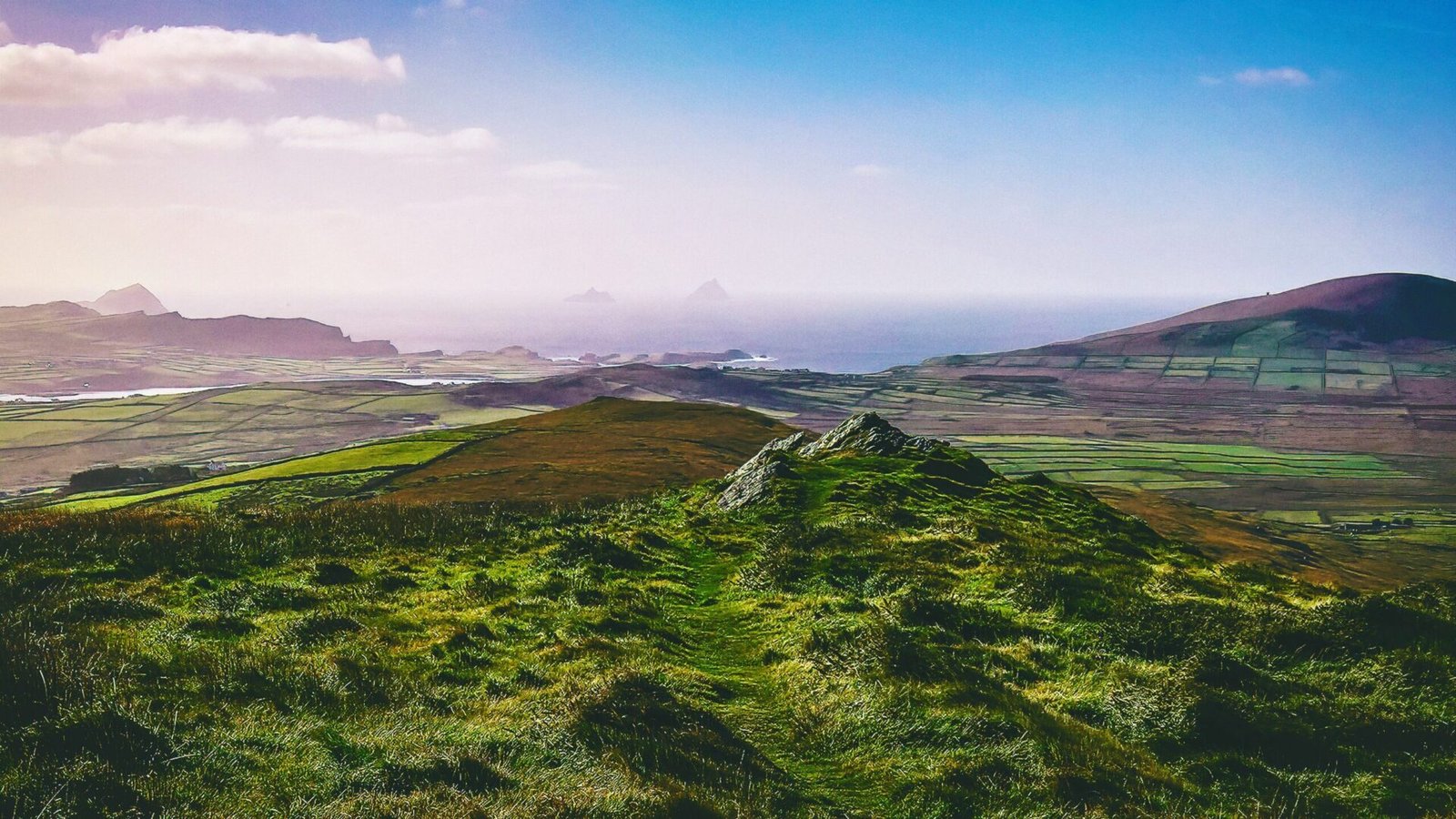
The Irish landscape, with its rolling hills, misty mountains, and ancient stone structures, is not merely a backdrop for the island’s rich tapestry of myths and legends—it is an integral part of them. In Ireland, the landscape and mythology are intertwined, each shaping and reflecting the other. This connection is deeply rooted in the prehistoric past of Ireland, where the natural world was imbued with spiritual significance and stories were woven into the very fabric of the land.
The Sacred Geography of Ireland
Ireland’s landscape is dotted with sites that are steeped in mythological significance. From the towering peaks of the Mourne Mountains to the mysterious depths of Lough Neagh, these natural features are not just geographical markers but sacred spaces that hold the echoes of ancient tales. The Hill of Tara, for example, is not only a central site in Irish mythology but also a real place that served as the ceremonial and political center of the ancient Irish kings. It is said to be the seat of the High Kings of Ireland and is associated with the Tuatha Dé Danann, a race of god-like beings who are said to have ruled Ireland in the mythological past.
Similarly, Newgrange, a prehistoric monument in County Meath, is aligned with the rising sun on the winter solstice and is linked to the myth of Aengus Óg, the god of love and youth. The connection between these sites and the myths associated with them suggests a profound relationship between the ancient people of Ireland and their environment, where the landscape itself was seen as a living entity, capable of interacting with the human world.
Mythical Beings and Natural Features
Many of the mythical beings in Irish folklore are directly associated with specific natural features. The banshee, a harbinger of death, is often linked to certain families and their ancestral lands. The púca, a shape-shifting spirit, is said to inhabit rural areas and is associated with the untamed aspects of the landscape, such as wild moors and rocky crags. These beings serve as guardians and personifications of the land, embodying its mysterious and unpredictable nature.
The Morrigan, a complex figure often depicted as a crow, is associated with both war and sovereignty and is tied to the River Boyne. The river itself is named after Boann, a goddess who is said to have created the river by challenging the power of the sacred well. This myth illustrates how the landscape was not only seen as a physical space but also as a canvas upon which the stories of gods and goddesses were painted.
The Role of Megalithic Structures
Ireland’s megalithic structures, such as dolmens, stone circles, and passage tombs, are not only archaeological marvels but also key components of the mythological landscape. These structures are often shrouded in legends that speak to their significance in the spiritual life of ancient communities. For instance, the dolmen known as Poulnabrone in the Burren is linked to tales of ancient druids and is thought to be a portal to the Otherworld.
These structures serve as physical reminders of the past, standing as silent witnesses to the stories that have been passed down through generations. They are often situated in places that align with celestial events, underscoring the connection between the heavens and the earth in Irish mythology. The alignment of Newgrange with the winter solstice is a prime example of how these ancient monuments were designed to interact with the natural world, creating a bridge between the human and the divine.
Landscape as a Narrative Device
In Irish mythology, the landscape often acts as a narrative device, shaping the events of the stories and influencing the actions of the characters. The Cattle Raid of Cooley (Táin Bó Cúailnge), one of the most famous tales in Irish mythology, is set against the backdrop of the rugged landscape of Ulster. The terrain itself becomes a character in the story, with the mountains, rivers, and valleys serving as obstacles and allies to the heroes and heroines.
The landscape is not just a passive setting but an active participant in the mythological narrative. It reflects the themes of the stories, such as conflict, transformation, and the relationship between humans and the natural world. In this way, the landscape becomes a living, breathing entity that interacts with the characters and shapes the course of their journeys.
The Enduring Legacy of Myth and Landscape
The connection between mythology and landscape in Ireland is not merely a relic of the past but a living tradition that continues to influence contemporary culture. The landscape remains a source of inspiration for artists, writers, and musicians, who draw upon its mythological associations to create new works that resonate with modern audiences. The enduring power of these myths is a testament to the deep connection between the people of Ireland and their land, a connection that has been preserved through centuries of storytelling and cultural expression.
In conclusion, the relationship between mythology and landscape in Ireland is a complex and multifaceted one, rooted in the prehistoric past and continuing to shape the cultural identity of the island. The landscape is not just a backdrop for the stories of gods, heroes, and mythical beings but an integral part of them, reflecting and shaping the narratives that have been passed down through generations. As we explore the rich tapestry of Irish mythology, we are reminded of the profound connection between the land and the stories that it holds, a connection that continues to captivate and inspire us today.