Overview of Significant Archaeological Sites Related to Language and Art
Ireland’s prehistoric landscape is a tapestry woven with the threads of myth, language, and art. The island’s ancient sites are not merely remnants of the past; they are vibrant echoes of a culture that has shaped the Irish identity. This exploration of key archaeological sites reveals the profound connection between Ireland’s prehistoric peoples and their expression through language and art.
Newgrange: A Portal to the Cosmos
Newgrange, a prehistoric monument in County Meath, stands as a testament to the ingenuity and spiritual depth of Ireland’s ancient inhabitants. Built around 3200 BC, this passage tomb predates Stonehenge and the Great Pyramids of Giza. Its most striking feature is the winter solstice illumination, where the rising sun floods the inner chamber with light, symbolizing rebirth and renewal.
The intricate carvings on the stones of Newgrange are more than mere decoration; they are a language in themselves. Spirals, lozenges, and other geometric motifs speak to a sophisticated understanding of the cosmos and the cycles of nature. These symbols are thought to be an early form of communication, a visual language that connects the physical and spiritual worlds.
The Hill of Tara: Seat of Kings and Legends
The Hill of Tara, another iconic site in County Meath, is steeped in myth and history. As the traditional seat of the High Kings of Ireland, Tara is a place where the lines between myth and reality blur. The Lia Fáil, or Stone of Destiny, is said to have roared when touched by the rightful king, a powerful symbol of sovereignty and divine right.
Tara’s significance extends beyond its political role; it is a cultural and spiritual center. The site is dotted with ancient monuments, including the Mound of the Hostages, a Neolithic passage tomb adorned with megalithic art. These carvings, like those at Newgrange, are believed to convey complex ideas and beliefs, serving as a bridge between the earthly and the divine.
The Rock of Cashel: A Confluence of Art and Faith
The Rock of Cashel, rising dramatically from the plains of County Tipperary, is a symbol of Ireland’s transition from paganism to Christianity. This site, associated with St. Patrick and the conversion of the Irish kings, is a treasure trove of medieval art and architecture.
The intricate carvings and frescoes found at Cashel reflect a fusion of Celtic and Christian motifs, illustrating the cultural synthesis that occurred during this pivotal period. The artistry of the site speaks to a society in transition, where ancient symbols were reinterpreted in the light of new religious beliefs.
Ogham Stones: The First Written Words
Scattered across the Irish landscape, Ogham stones are the earliest known form of writing in Ireland. These standing stones, inscribed with a unique alphabet, offer a glimpse into the linguistic evolution of the island. Ogham script, consisting of linear strokes carved along the edges of stones, was used primarily for inscriptions on boundary markers and memorials.
The presence of Ogham stones highlights the importance of language as a tool for communication and identity. They serve as a testament to the adaptability and resilience of the Irish language, which has survived through centuries of change and upheaval.
The Burren: A Canvas of Prehistoric Art
The Burren, a unique karst landscape in County Clare, is home to a wealth of prehistoric art. This rugged terrain, with its limestone pavements and ancient tombs, has inspired generations of artists and storytellers. The rock art found in the Burren, including petroglyphs and cup-and-ring marks, offers insight into the symbolic world of Ireland’s early inhabitants.
These carvings are believed to have served ritualistic purposes, perhaps as part of ceremonies to honor the land and its spirits. The Burren’s art is a reflection of a deep connection to the landscape, where every stone and crevice holds meaning and memory.
The Céide Fields: A Window into Neolithic Life
The Céide Fields in County Mayo represent one of the most extensive Stone Age monuments in the world. This archaeological site, buried beneath layers of peat, reveals a complex system of fields, houses, and megalithic tombs dating back over 5,000 years.
The discovery of the Céide Fields has transformed our understanding of Neolithic life in Ireland. The site provides evidence of a highly organized society with advanced agricultural practices. The art and artifacts found here, including pottery and stone tools, offer a glimpse into the daily lives and beliefs of these early farmers.
The Dingle Peninsula: A Tapestry of Myth and Art
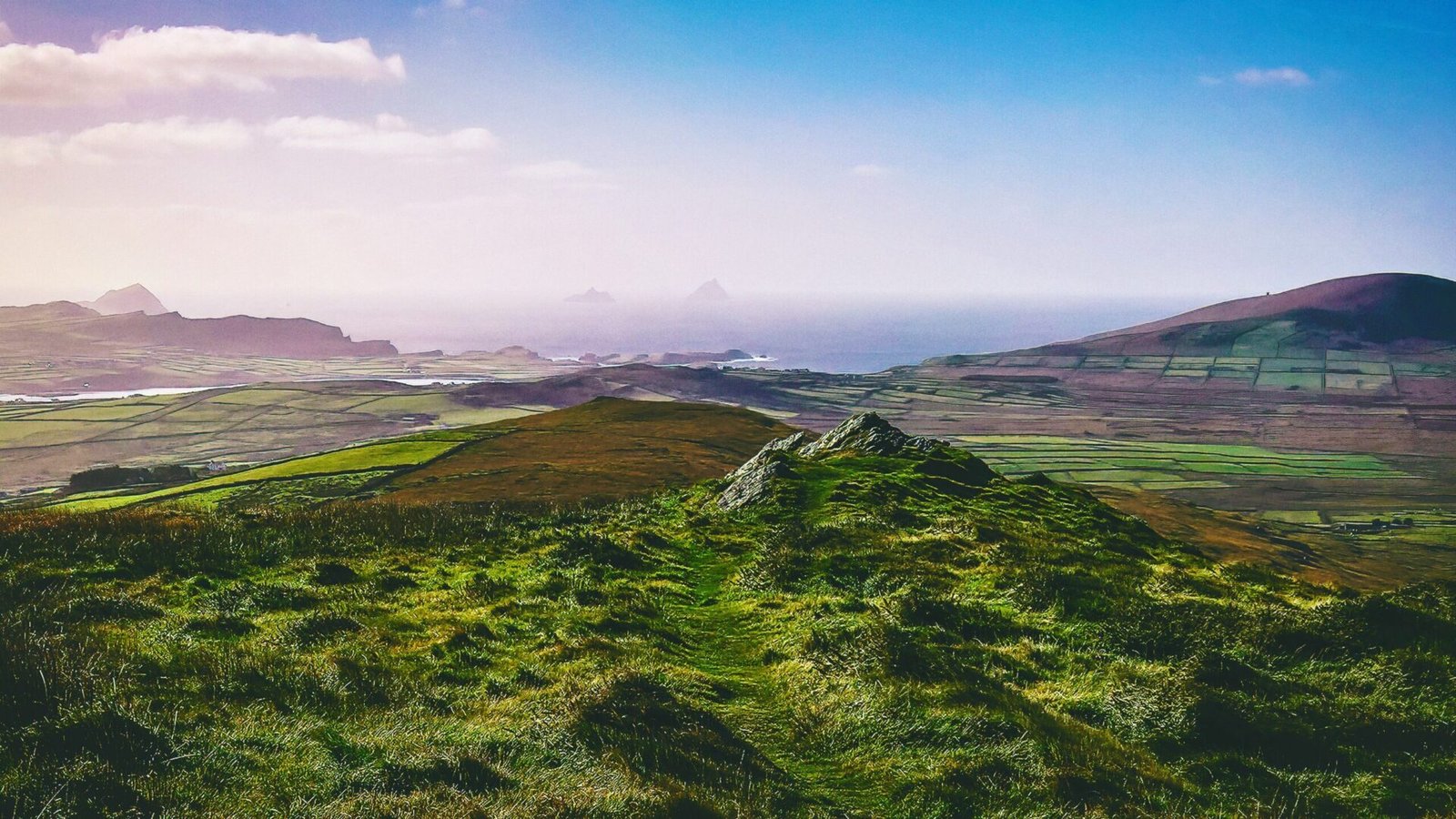
The Dingle Peninsula, with its dramatic landscapes and rich folklore, is a microcosm of Ireland’s cultural heritage. This region is home to numerous archaeological sites, including ring forts, standing stones, and early Christian monastic settlements.
The art and inscriptions found on the Dingle Peninsula reflect a blend of pagan and Christian influences. The intricate stone carvings and ogham inscriptions are a testament to the enduring power of myth and the adaptability of artistic expression in the face of cultural change.
Conclusion: A Living Legacy
Ireland’s archaeological sites are more than historical curiosities; they are living legacies that continue to inspire and inform. The art and language of these ancient places offer a window into the minds and hearts of Ireland’s earliest peoples, revealing a culture deeply connected to the land and its stories. As we explore these sites, we are reminded of the enduring power of myth and the timeless nature of human creativity.