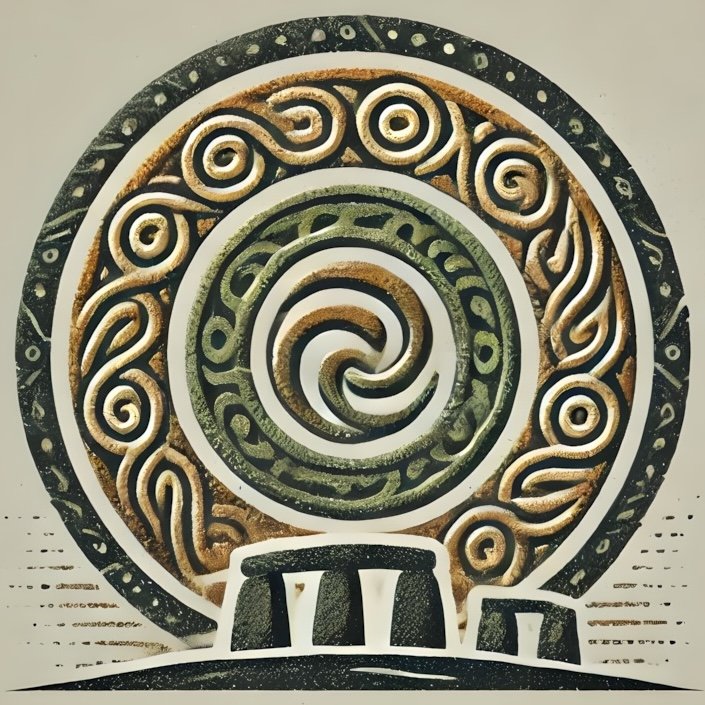

Introduction to La Tène Artifacts
The La Tène culture, flourishing from approximately 450 BCE to the Roman conquest, is renowned for its distinctive art style, which left an indelible mark on the Celtic world, including Ireland. This period, named after the archaeological site of La Tène on Lake Neuchâtel in Switzerland, is characterized by its intricate metalwork, pottery, and weaponry. The artifacts from this era are not merely utilitarian objects but are imbued with rich mythological themes that offer a window into the spiritual and cultural life of the Celts. In Ireland, these artifacts provide a tangible connection to the mythological narratives that have been passed down through generations, intertwining the physical landscape with the mythic.
Symbolism in La Tène Art
La Tène artifacts are renowned for their complex symbolism, which often reflects the cosmological beliefs of the Celts. Spirals, triskeles, and other geometric motifs are prevalent, symbolizing concepts such as eternity, the cycle of life, and the interconnectedness of all things. These symbols are not merely decorative but serve as a visual language that conveys profound spiritual truths. For example, the triskele, a motif consisting of three interlocked spirals, is thought to represent the tripartite nature of existence: land, sea, and sky, or birth, death, and rebirth. This motif is echoed in Irish mythology, where the number three holds significant power, as seen in the triads of deities and heroes.
The Role of Animals in La Tène Art
Animals play a crucial role in La Tène art, often depicted in stylized forms that emphasize their spiritual significance. Creatures such as boars, birds, and horses are common, each carrying its own symbolic weight. The boar, for instance, is associated with strength and courage, qualities revered by the warrior culture of the Celts. In Irish mythology, the boar appears in tales such as the story of Diarmuid and Gráinne, where it is both a formidable adversary and a symbol of fate. Birds, often depicted in flight, symbolize transcendence and the connection between the earthly and the divine. The horse, a symbol of sovereignty and power, is frequently associated with the goddess Epona, who was worshipped across the Celtic world.
Mythological Narratives and La Tène Artifacts
La Tène artifacts often serve as tangible representations of mythological narratives, bridging the gap between the physical and the spiritual. The Gundestrup Cauldron, though discovered in Denmark, is a prime example of how La Tène art encapsulates mythological themes. This intricately decorated silver cauldron features scenes of deities, warriors, and animals, each panel telling a story that resonates with Celtic mythology. In Ireland, similar artifacts, such as the Turoe Stone with its swirling patterns, are believed to be imbued with mythological significance, possibly serving as ceremonial objects or markers of sacred spaces.
The Influence of the Landscape
The Irish landscape, with its rolling hills, ancient forests, and sacred sites, is deeply intertwined with the mythological themes found in La Tène artifacts. The Celts viewed the landscape as a living entity, imbued with spiritual significance and inhabited by deities and spirits. This connection is reflected in the art of the period, where natural motifs and forms are prevalent. The landscape itself becomes a canvas upon which the myths are inscribed, with La Tène artifacts serving as both markers and mediators of this sacred geography. Sites such as Newgrange, with its alignment to the winter solstice, demonstrate how the Celts integrated their understanding of the cosmos with the physical world, a theme echoed in the art of the period.
The Continuity of Mythological Themes
The mythological themes present in La Tène artifacts did not vanish with the arrival of Christianity in Ireland but rather evolved and persisted, often merging with Christian iconography. This continuity is evident in the high crosses and illuminated manuscripts of the early medieval period, where La Tène motifs are reinterpreted within a Christian context. The Book of Kells, for instance, features intricate knotwork and spirals reminiscent of La Tène art, demonstrating the enduring influence of these ancient symbols. This blending of traditions highlights the resilience of Celtic mythology and its ability to adapt and endure through changing times.
Conclusion
La Tène artifacts offer a fascinating glimpse into the mythological world of the Celts, revealing a culture deeply connected to its spiritual beliefs and the natural landscape. Through their intricate designs and symbolic motifs, these artifacts serve as a testament to the rich tapestry of myths that have shaped Irish identity. As we explore these ancient objects, we are reminded of the enduring power of myth to connect us to our past, our landscape, and the mysteries of existence.