Site Connections: Bridging Irish Mythology and Prehistory
The rich tapestry of Irish mythology is woven with threads of history, landscape, and cultural identity. As we delve into the connection between Irish prehistory and its myths, we discover that the land itself serves as a living archive, preserving stories that have shaped the Irish psyche for millennia. This pillar page explores significant archaeological sites tied to myths, offers suggestions for visits that reflect the Mesolithic lifestyle, and highlights the profound relationship between the landscape and the narratives that spring from it.
Locations of Archaeological Significance Tied to Myths
Newgrange: The Temple of the Sun
One of the most iconic sites in Ireland, Newgrange, is a prehistoric passage tomb located in County Meath. Built around 3200 BCE, it predates Stonehenge and the Great Pyramids of Giza. Newgrange is not only an architectural marvel but also a focal point in Irish mythology. It is often associated with the Sun God, Bóthar na Naomh, and is said to be the burial place of the mythical figure, Dagda.
Visitors to Newgrange can witness the extraordinary winter solstice phenomenon, where sunlight floods the inner chamber, illuminating intricate carvings that tell stories of the ancients. This event symbolizes rebirth and renewal, echoing themes prevalent in Irish mythology.
Loughcrew: The Hills of the Witch
Another significant site is Loughcrew, a complex of passage tombs situated on the hills of County Meath. The site is steeped in myth, particularly the tale of the Cailleach, or the Hag of Beare, who is said to have turned to stone after a fierce battle. The tombs at Loughcrew are aligned with the rising sun during the equinoxes, suggesting a deep connection between the celestial and the terrestrial.
The carvings found at Loughcrew, including spirals and lozenges, are believed to represent the passage of time and the cycles of life, resonating with the stories of the Cailleach and her dominion over the land. Visitors can hike the hills, absorbing the breathtaking views and the palpable sense of history that lingers in the air.
The Hill of Tara: The Seat of Kings
The Hill of Tara, once the seat of the High Kings of Ireland, is a site of immense archaeological and mythological significance. It is a landscape dotted with ancient burial mounds, standing stones, and the famous Lia Fáil, or Stone of Destiny, which is said to roar when a rightful king stands upon it.
Tara is steeped in legends, including tales of the Tuatha Dé Danann, the mythical race of gods and heroes. The site’s connection to kingship and the divine reflects the intertwining of governance and spirituality in ancient Irish culture. Visitors can explore the various mounds and structures, each telling a story of power, lineage, and the mystical forces that shaped the land.
The Boyne Valley: A Mythical River
The Boyne Valley, home to several significant archaeological sites, is often considered the cradle of Irish civilization. The River Boyne itself is intertwined with numerous myths, including the tale of the goddess Boann, who is said to have created the river. The valley is dotted with Neolithic monuments, including passage tombs and standing stones, which echo the stories of the ancients.
Visitors can explore the landscape, following the river’s winding path and discovering the remnants of a bygone era. The Boyne Valley is not just a geographical location; it is a living narrative of the interplay between nature and mythology, where every bend in the river and every stone tells a story.
Suggested Visits to Sites Reflecting the Mesolithic Lifestyle
Mount Sandel: The First Settlers
Mount Sandel, located in County Londonderry, is one of the earliest known Mesolithic sites in Ireland, dating back to around 7000 BCE. Excavations have uncovered evidence of early settlers who lived in small, semi-permanent structures and relied on hunting, fishing, and foraging for sustenance.
Visitors to Mount Sandel can walk through the site, where the remnants of ancient hearths and tools provide a glimpse into the lives of these early inhabitants. The nearby River Bann, rich in resources, would have been a vital lifeline for the Mesolithic people, connecting them to the landscape and its bounty.
Ferriter’s Cove: A Coastal Connection
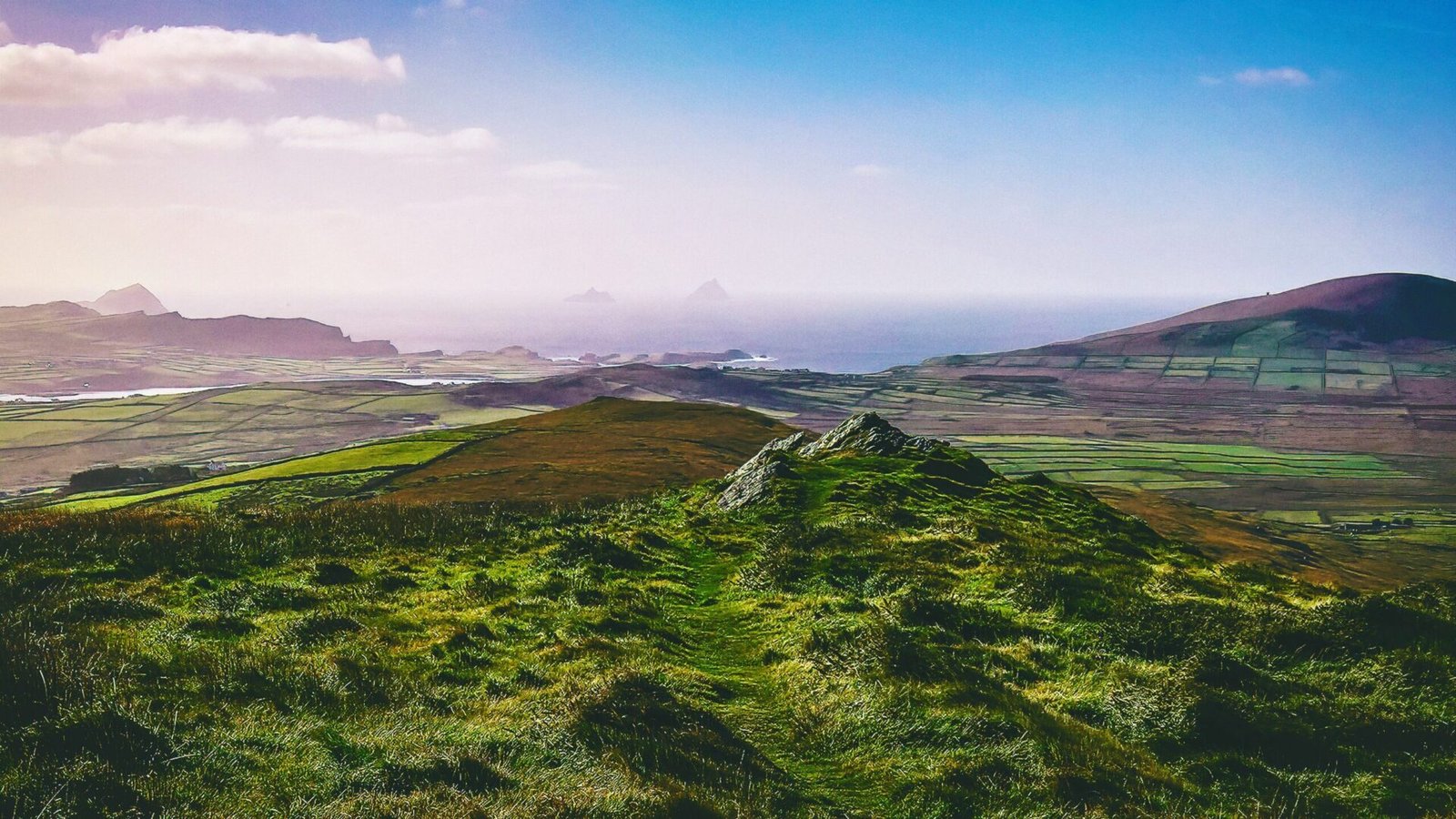
Ferriter’s Cove, located on the Dingle Peninsula, is another site that reflects the Mesolithic lifestyle. Archaeological findings, including flint tools and evidence of ancient habitation, suggest that this coastal area was a hub for fishing and gathering. The stunning cliffs and pristine beaches offer visitors a chance to connect with the natural environment that sustained these early communities.
Walking along the cove, one can imagine the lives of those who once roamed this land, their stories echoing through the waves and the wind. The site serves as a reminder of humanity’s enduring relationship with the sea and the land.
The Céide Fields: An Agricultural Revolution
The Céide Fields in County Mayo represent one of the most significant archaeological discoveries in Ireland. Dating back to 5000 BCE, this site features an extensive network of stone walls, field systems, and dwelling sites, indicating a sophisticated understanding of agriculture among Mesolithic people.
Visitors can explore the fields and the accompanying visitor center, which provides insights into the lives of those who cultivated the land long before the arrival of modern farming techniques. The connection between the landscape and the people who shaped it is palpable, as visitors walk through the remnants of an ancient agricultural landscape that laid the groundwork for future generations.
The Landscape as a Living Narrative
The connection between Irish mythology and prehistory is not merely academic; it is a living narrative that continues to resonate in the landscape. Each site, from Newgrange to the Céide Fields, serves as a testament to the enduring relationship between people and place. The myths that have emerged from these landscapes are not just stories; they are reflections of the human experience, shaped by the natural world.
As visitors traverse these ancient sites, they are invited to engage with the stories that have shaped Irish identity. The landscape becomes a canvas upon which the myths are painted, each hill, river, and stone imbued with meaning. The journey through these sites is not just a physical exploration; it is a spiritual pilgrimage, a connection to the past that continues to inform the present.
In this exploration of site connections, we find a profound understanding of how the ancient and the modern coexist, how myths and history intertwine, and how the landscape serves as a bridge between the two. The stories of the past are alive in the present, waiting to be discovered by those willing to listen.